

Fully funded master's degrees in pharmacoepidemiology aren't gifts.
They're earned.
They cover tuition, a living stipend, and often travel or health benefits, but funded slots are scarce.
Top programs award less than 10 to 15 percent of applicants.
To win one, build a tight research profile, reach out to faculty early, and apply for RA, TA, and fellowship routes in parallel.
Start your search six to twelve months ahead and track at least ten funding options.
If this was my plan, I'd focus on research fit and targeted outreach.
TL;DR
A fully funded pharmacoepidemiology master's covers tuition, fees, and a living stipend, but funded spots are competitive. Your best moves are research assistantships, teaching assistantships, merit fellowships, external scholarships, and employer sponsorship. Apply to multiple sources at once. Start 6 to 12 months early, connect directly with faculty whose research matches yours, and build your profile with real research experience and stats skills before you apply. When an offer comes in, read the full package carefully and don't be afraid to ask about better terms.
Pathways to Securing Full Funding for Your Pharmacoepidemiology Master's Degree
A fully funded master's in pharmacoepidemiology means the program covers your tuition and fees, and most cases include a monthly stipend for living costs too. Some packages go further, adding health insurance, conference travel support, and research allowances. So when you see "fully funded," it's not just free classes. It's a complete financial package built so you can focus entirely on your studies and research.
Here's the honest part: funded positions are competitive. Acceptance rates for funded spots can sit below 10 to 15% at top programs. The funding doesn't just go to anyone who applies. It goes to applicants who've built a strong research profile, connected with the right faculty, and put together sharp, targeted applications.

The main funding routes worth knowing are research assistantships, where you work on a faculty member's project and receive tuition coverage plus a stipend. Teaching assistantships offer similar compensation for supporting course delivery. Merit-based fellowships are competitive awards with no work obligations attached. External scholarships and grants come from foundations, industry bodies, and government agencies outside the university. And employer sponsorship is where your current employer covers tuition, often in exchange for continued employment after graduation.
The smartest move is pursuing several of these at once. Don't put all your effort into one application and wait. Build a list of 10 or more funding opportunities and work them in parallel. Stipends for fully funded positions typically range from $20,000 to $35,000 per year depending on the institution, location, and award type. Factor in tuition coverage, which can run $20,000 to $60,000 annually at many programs, and the total value of a funded position becomes very significant. Start early, apply broadly, and track everything.
Top Universities Offering Funded Pharmacoepidemiology Master's Programs
Not every university offers the same access to funding. Schools with active pharmaceutical research departments, large federal grants, and established faculty networks are far more likely to have funded positions available. The bigger the research portfolio, the more likely there's a project that needs a skilled graduate student. That's where you want to be.

| University | Location | Typical Funding Options |
|---|---|---|
| Harvard T.H. Chan School of Public Health | Boston, MA, USA | Merit fellowships, RA positions, departmental awards |
| Johns Hopkins Bloomberg School of Public Health | Baltimore, MD, USA | Named scholarships, RA/TA positions, NIH training grants (T32) |
| UNC Gillings School of Global Public Health | Chapel Hill, NC, USA | Research assistantships, tuition waivers, departmental fellowships |
| University of Florida | Gainesville, FL, USA | RA/TA positions, college-level scholarships, assistantship packages |
| Utrecht University | Utrecht, Netherlands | University grants, EU-funded research positions, low base tuition |
| London School of Hygiene & Tropical Medicine | London, UK | Wellcome Trust grants, LSHTM studentships, external fellowships |
North American programs at schools like Johns Hopkins, Harvard, and UNC are structured around research centers and departmental grants. Funding at these schools often flows through NIH training grants, known as T32 awards, which support students working in areas like drug safety or health outcomes research. In many cases, your supervisor's existing research funding is what pays your stipend and tuition. That's why finding a faculty member whose work matches your interests isn't just about academic fit. It's directly tied to your chances of getting funded.
European programs work differently. At Utrecht University, base tuition is considerably lower than comparable U.S. programs, even for international students. The London School of Hygiene and Tropical Medicine connects students to large funding bodies like Wellcome Trust and the UK Research and Innovation network. Stipends may not always match U.S. research assistantship levels, but the lower cost structure and access to European research funding make them genuinely affordable and sometimes fully covered paths into the field.
Research Assistantships in Pharmacoepidemiology: Your Primary Funding Source

Research assistantships are the most common way master's students in pharmacoepidemiology get fully funded. A typical package includes a full tuition waiver plus a stipend that generally runs between $22,000 and $32,000 per year. In exchange, you work 15 to 20 hours per week on a faculty member's research project. It's paid work that directly builds your skills, which makes it one of the best funding arrangements in graduate education.
Your day-to-day responsibilities as an RA depend on the project, but the work is usually hands-on and research-focused. You might be cleaning and analyzing large health datasets, running statistical models, writing sections of grant reports, or supporting literature reviews for upcoming publications. The hours are manageable alongside coursework, and the experience you gain is exactly what employers and doctoral programs notice.
Common research areas pharmacoepidemiology RAs work in include drug safety surveillance using claims data or electronic health records, comparative effectiveness studies comparing treatment outcomes across patient groups, and health outcomes research measuring real-world medication impact. You'd also likely work with database management and analysis tools like SAS, R, or Stata, support literature and systematic reviews on drug safety topics, and contribute to post-market surveillance studies supporting regulatory decision-making.
To land an RA position, start your search 6 to 12 months before the program's start date. Look at faculty profiles on department websites, identify professors whose research matches your interests, and reach out directly by email. Introduce yourself briefly, describe your background, and ask about potential funding. Many RA positions are filled before formal admissions rounds close. If you wait until after you're admitted to ask about funding, you may have already missed the window.
Teaching Assistantships and Fellowship Opportunities for Pharmacoepidemiology Students

Teaching assistantships give you another route to full or partial funding. A TA position typically involves supporting one or two courses per semester, holding office hours, grading assignments, leading discussion sections, or helping coordinate class logistics. The time commitment is usually 10 to 20 hours per week, and the compensation is comparable to RA positions, often including a full tuition waiver and a similar monthly stipend.
In pharmacoepidemiology programs, TA work is often tied to foundational courses like biostatistics, epidemiologic methods, introduction to drug safety, or health data analysis. A strong quantitative background makes you a natural fit for those roles. Some programs also use TAs for introductory public health courses at the undergraduate level. Either way, you're building real teaching and communication skills alongside your research training.
Fellowships work differently. They don't require you to work for the funding. These are merit-based awards granted based on your academic record, research potential, and career goals. One of the most valuable sources for pharmacoepidemiology students is the NIH T32 training grant program, where grants are awarded to universities and then distributed to selected students. T32-funded students typically receive $25,000 to $30,000 per year plus full tuition coverage. Slots are limited and competitive, but if your research interests align with the grant's focus area, it's worth pursuing seriously.
Pharmaceutical companies also run fellowship programs supporting graduate students in relevant fields. Companies like Pfizer, Merck, and GSK periodically offer fellowships or sponsored research awards ranging from $15,000 to $40,000. These are usually tied to a defined research project or area of company interest, and some include a summer placement component. Monitor their academic partnerships or corporate responsibility pages for current openings, since application processes vary by company.
Essential Qualifications to Compete for Funded Pharmacoepidemiology Positions

Funded positions go to applicants who stand out. Most programs receive far more applications than they have funded spots, so reviewers are looking for clear signals that you're ready to do real research from day one.
Your academic background matters a lot. Programs prefer applicants with undergraduate degrees in pharmacy, public health, biology, statistics, health sciences, or related fields. Strong coursework in biostatistics, epidemiology, and research methods is a significant advantage. If your undergraduate transcript shows those subjects, you're already building a case for funding eligibility before you write a single word of your statement of purpose.
| Qualification Type | Minimum Requirement | Competitive Requirement |
|---|---|---|
| GPA | 3.0 or above | 3.5 or above |
| Quantitative coursework | Basic statistics or math | Biostatistics, research methods, epidemiology |
| Research experience | Any lab or project involvement | Co-authored work, data analysis roles, clinical research |
| GRE scores (where required) | 300 combined | 310 or above, 80th percentile or higher |
| Letters of recommendation | 2 academic references | 3 references including a research supervisor |
Beyond grades and test scores, additional assets can push your application to the top. Publications or conference presentations belong on your CV. Experience at a pharmaceutical company, hospital, public health agency, or clinical research organization shows you understand how the field actually operates. Programming skills in SAS, R, Python, or SQL are increasingly expected in pharmacoepidemiology research, so any demonstrated proficiency here is a real advantage. Each extra credential signals that you're not just academically prepared but professionally ready.
Crafting a Winning Application for Funded Pharmacoepidemiology Programs

A strong application for a funded position isn't just a collection of documents. It's a coherent case for why you belong in that program, with that faculty member, working on that kind of research. The more targeted and specific your application, the better your chances.
Statement of Purpose Best Practices
Your statement of purpose should do one thing clearly: show that you know what you want to study and that this program is the right place to study it. Name specific faculty members whose work interests you. Describe your pharmacoepidemiology focus, whether that's drug safety surveillance, comparative effectiveness research, or real-world health outcomes, and connect it to your past experience. Keep it between 500 and 1,000 words. Reviewers are reading dozens of these, so clarity and specificity matter more than length. A line like "I want to study how post-market drug safety signals are identified in claims data, and Dr. [Name]'s work on pharmacovigilance methods in Medicare populations is directly aligned with that goal" does more work than two paragraphs of general interest.
Contacting Potential Advisors
Reach out to faculty 3 to 6 months before application deadlines, not after you've submitted. A short, professional email is all you need. Introduce yourself, mention your background, describe what draws you to their specific research, and ask whether they're taking students and if any funded positions are available. Keep it under 200 words. Don't send a generic email to 20 professors at once. Tailor each message. Faculty can tell when something's copied and pasted, and it does more harm than good. The goal is to start a real conversation.
Application Timeline and Materials
Most programs have application deadlines between December and February for fall intake. Funding decisions often come in January through March, sometimes before final admission decisions. You'll typically need official transcripts from all institutions attended, GRE scores where required, a CV highlighting research and relevant skills, a statement of purpose tailored to the program, 2 to 3 letters of recommendation ideally including a research supervisor, proof of English proficiency for international applicants, and any program-specific supplemental forms.
Apply to between 5 and 8 programs to give yourself a realistic shot at funded consideration. Some programs automatically review all admitted applicants for funding. Others require a separate funding application or a faculty nomination. Always read the funding instructions specific to each program carefully, as the process varies and missing a step can cost you a funded offer.
External Scholarships and Grants for Pharmacoepidemiology Master's Students
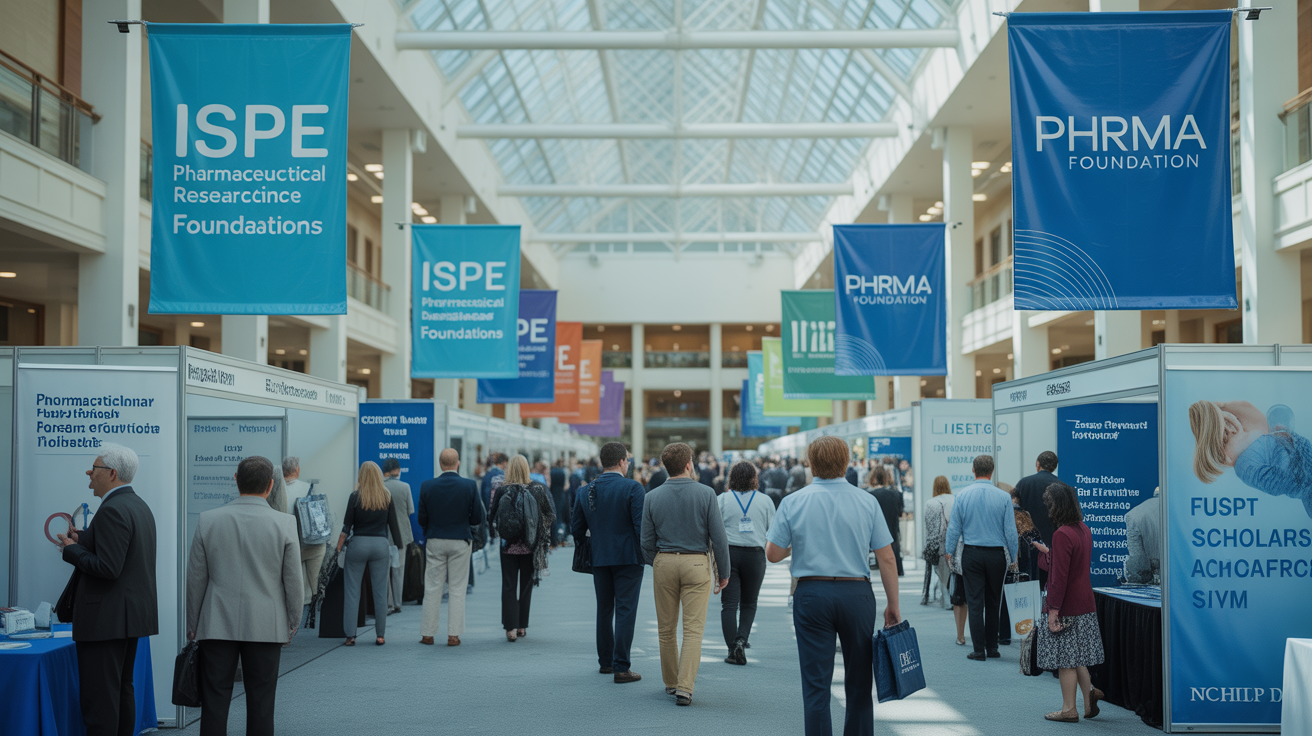
University funding isn't your only route. External scholarships and grants exist specifically to support students in pharmaceutical sciences, epidemiology, and public health, and many can be combined with an assistantship to cover gaps or add to your total support. Think of external funding as a layer you build on top of your base offer, or in some cases, the foundation when university funding isn't available.
Key external funding sources worth targeting include the PhRMA Foundation Predoctoral Fellowships, which support students in pharmaceutical sciences and pharmacoepidemiology-relevant fields. The AFPE Gateway to Research Scholarships are focused on pharmacy graduate students entering research careers. ISPE Student Research Grants are awarded through the International Society for Pharmacoepidemiology for student-led projects. NIH Individual Predoctoral Fellowships (F31) are competitive federal grants supporting dissertation research, with some master's to PhD pathways qualifying. Fulbright Programs are available for both U.S. students studying abroad and international students coming to the U.S. Country-specific research councils like NSERC and SSHRC for Canadian applicants or UK Research and Innovation for British students are also worth exploring. Professional pharmacy organization scholarships from ASHP, APhA Foundation, and state-level associations round out the list.
Application deadlines vary widely but most fall between October and March. Award sizes range from $5,000 for smaller organization grants up to full tuition plus stipend for prestigious fellowships. Some external awards are explicitly stackable with university funding, meaning you can hold an RA stipend and an external scholarship simultaneously, though always confirm this with your program's graduate administrator. The ISPE student grants are worth targeting early since they're tailored directly to the pharmacoepidemiology field and signal strong professional engagement when listed on your CV.
Employer Sponsorship Programs for Pharmacoepidemiology Education

If you're already working in pharmacy, healthcare, pharmaceutical manufacturing, or a related field, employer sponsorship is one of the most practical and underused funding routes available to you. Many organizations actively want their employees to hold advanced degrees in areas like pharmacoepidemiology, drug safety, or health outcomes, and they're willing to pay for it.
Pharmaceutical companies and contract research organizations are among the most common sponsors for this kind of education. Companies like Johnson and Johnson, AstraZeneca, ICON, Covance, and IQVIA regularly offer tuition reimbursement programs. Coverage varies, but many programs reimburse partial to full tuition for relevant graduate degrees and some cover required fees and textbooks too. If you're already in a drug safety, outcomes research, or pharmacovigilance role, it's worth having a direct conversation with your HR department before assuming you'll need to fund the degree yourself.
Regulatory agencies are another strong source of employer-backed education. The FDA and the European Medicines Agency both support advanced training for staff in drug review and safety monitoring roles. Government positions in public health agencies often come with professional development budgets and formal education support programs. Getting into one of these roles before starting your master's degree could significantly reduce what you pay out of pocket.
The key considerations with employer sponsorship are service commitments and study format. Most sponsors require you to stay employed with them for 1 to 3 years after graduation. Leave early and you may have to repay part of the funding. You'll also likely need to study part-time while continuing to work, which affects your timeline and can limit your options to programs with flexible or online delivery. For many working professionals, though, it's the cleanest path to a fully covered degree without taking on debt.
International Student Funding Options for Pharmacoepidemiology Programs

International students face a real challenge when it comes to funding graduate education in pharmacoepidemiology. Some fellowships and assistantships are restricted to U.S. citizens or permanent residents, and navigating visa requirements on top of funding applications adds another layer of complexity. That said, international students do get fully funded positions, and the path becomes clearer once you know where to look.
Universities with established international research programs have the strongest track records of funding international pharmacoepidemiology students. Utrecht University and the London School of Hygiene and Tropical Medicine both have strong histories of supporting international candidates through research positions and external grant funding. McGill University and the University of Toronto offer funded positions through their epidemiology and public health departments with fewer citizenship restrictions than many U.S. programs. If you're open to studying outside the U.S., these institutions are worth prioritizing.
External funding sources specifically available to international students include the Fulbright Foreign Student Program, one of the most recognized international scholarships for graduate study in the U.S. Home country scholarship programs like the China Scholarship Council, CONACYT for Mexican students, or equivalent government-funded schemes are worth researching. Many programs also set aside named fellowships exclusively for international applicants. Several EU-based programs charge minimal fees even for non-EU students, and global health research grants from organizations like the Bill and Melinda Gates Foundation and Wellcome Trust support population health research internationally.
Visa status also affects how you receive and report your funding. International students on F-1 visas can hold on-campus assistantships without additional work authorization. Some fellowships use a J-1 visa format, which has different employment rules and requires a designated sponsor organization. Stipend income from assistantships is typically taxable, and international students are often taxed at a higher rate without treaty protections. Before accepting a funded offer, confirm the visa type the position requires and consult your university's international student services office about the tax implications of your specific stipend amount.
Building Your Pharmacoepidemiology Profile Before Applying

The applications that win funded positions are almost never put together in the last few weeks before a deadline. They're built over 1 to 2 years of intentional preparation. If you're reading this before you've applied, that's genuinely good news. You still have time to make the kind of moves that separate funded applicants from the rest.
Start by getting hands-on research experience. Volunteer in a university research lab, even unpaid, and look for positions as a research coordinator or clinical research assistant at a hospital, health system, or pharmaceutical company. These roles give you exposure to the data, methods, and workflows that pharmacoepidemiology programs are built around. Faculty reviewing applications are looking for students who've already touched real research, not just read about it.
In the 12 to 24 months before you apply, complete online courses in pharmacoepidemiology or pharmacovigilance through platforms like Coursera, edX, or ISPE. Learn statistical software, starting with R or SAS since both are widely used in the field. Gain experience with healthcare databases such as claims data, electronic health records, or registries. Attend the ISPE annual meeting or a regional pharmacoepidemiology conference to build your network. Seek mentorship from a practicing pharmacoepidemiologist or public health researcher. And pursue relevant certifications like Clinical Research Coordinator or a certificate in pharmacovigilance if they're accessible to you.
When it comes to your application, document everything. List online courses on your CV under professional development. Describe database work in your statement of purpose with specific tools and data types named. If you attended a conference, mention it. Reviewers notice candidates who are already engaging with the field outside of a classroom, and that kind of self-directed initiative signals exactly the type of student research programs want to fund.
Understanding Funding Packages and Negotiating Your Master's Offer
When a funded offer lands in your inbox, read it carefully before responding. Not all funding packages are equal, and the details matter more than the headline numbers.
| Funding Component | What to Look For | Questions to Ask |
|---|---|---|
| Tuition coverage | Full waiver vs. partial credit vs. reimbursement | Is tuition fully waived or billed and then credited? Are fees included? |
| Stipend amount | Annual total and payment frequency | Is the stipend recurring each semester? Does it continue over summer? |
| Health insurance | Full coverage vs. subsidized plan | Is health insurance included or subsidized? What’s the out-of-pocket cost? |
| Summer funding | Whether support continues outside of academic year | Is summer funding guaranteed or dependent on a project or grant? |
| Additional benefits | Conference travel funds, research budgets, relocation support | Is there a travel or research allowance? Is visa or relocation support provided? |
When comparing offers from different programs, don't just look at stipend numbers. Factor in cost of living for the city where the program is located. A $28,000 stipend in a mid-sized college town may go further than a $33,000 stipend in Boston or London. Use cost-of-living calculators to get a realistic picture of what each offer is actually worth day to day. Also consider whether the tuition waiver is guaranteed for the full length of the program or tied to continued performance and funding availability.
Negotiation is possible, especially when you hold multiple funded offers. You don't need to be aggressive about it. A professional, straightforward message stating that you have a competing offer and are weighing your options is enough to open the conversation. Ask whether the stipend can be adjusted, whether multi-year funding is guaranteed beyond the first year, and whether there are additional research or travel grants you'd be eligible to apply for once enrolled. Some programs have discretionary funds that don't get advertised but are available to the right candidates who simply ask.
Final Words
Funding a Master's in Pharmacoepidemiology is absolutely within reach if you go in with a clear plan.
Research assistantships, teaching positions, fellowships, external scholarships, and employer sponsorship each open a different door. The key is not waiting to find the perfect one. Apply to multiple sources at once, start early, and build your profile before you even submit an application.
The competition is real, but so is the opportunity. If you stay focused on how you can get a fully funded Master's in Pharmacoepidemiology, you will put yourself ahead of most applicants.